Understanding Long Beach Tree Removal Permits
Before you hire a contractor or pick up a chainsaw, it's critical to understand the permitting requirements for tree removal in Long Beach. Many homeowners assume they can remove any tree on their own property without restriction, but that assumption can lead to hefty fines and legal complications. Long Beach has established a comprehensive tree ordinance designed to protect the urban forest, maintain neighborhood aesthetics, and preserve the environmental benefits that mature trees provide to our community.
The City of Long Beach requires permits for removing most trees on private property, particularly those that are protected under local code. A tree removal permit is not just bureaucratic red tape; it ensures that trees are removed safely, legally, and with proper consideration for the surrounding community. Failing to obtain the necessary permits can result in fines ranging from hundreds to thousands of dollars, plus the cost of replanting requirements. Understanding these rules upfront will save you time, money, and stress.
Parkway Trees and Street Tree Rules in Long Beach
Parkway trees, also known as street trees or public trees, are those planted in the strip of land between the sidewalk and the street. These trees belong to the City of Long Beach, not to the adjacent property owner, even though the homeowner may maintain them. This distinction is crucial because it means you absolutely cannot remove a parkway tree without explicit permission from the city. Any attempt to do so without authorization is considered vandalism or destruction of city property and can result in serious consequences.
If you have a diseased, damaged, or problematic parkway tree in front of your home, your first step should be to contact the City of Long Beach Parks and Recreation Department or the Public Works Department to request an inspection and removal. The city evaluates each request based on the tree's health, safety hazards, and overall condition. Even if the tree is clearly dead or poses a danger, you must wait for official approval before removal. Homeowners who remove parkway trees without authorization often face fines and are required to replant at their own expense. When you need professional guidance on parkway tree issues, the team at Long Beach Tree Service can help you navigate the process and determine the best course of action.
Protected Trees on Private Property in Long Beach
Within Long Beach, certain tree species and sizes are protected under the municipal code, regardless of whether they grow on public or private land. Protected trees typically include native species, heritage trees, and trees that meet a minimum diameter threshold, usually measured at breast height (DBH). Common protected species in our area include coast live oaks, California sycamores, and various native pines. If you're uncertain whether a tree on your property is protected, consulting with a experienced arborist or the city's planning department can provide clarity.
To remove a protected tree, you must first obtain a tree removal permit from the City of Long Beach. The permit application typically requires documentation showing why removal is necessary, such as evidence of disease, structural damage, or genuine safety concerns. The city reviews these applications carefully and may deny permits for trees that can be saved through tree trimming and pruning or other interventions. Even if your permit is approved, the city may impose conditions, such as requiring you to plant replacement trees elsewhere on your property or contribute to a city tree-planting fund.
What to Check Before You Cut: A Homeowner's Checklist
Before you make any decisions about tree removal, take time to evaluate your situation thoroughly. Start by identifying the tree species and measuring its diameter. If the tree is large, mature, or native to the region, there's a good chance it's protected. Next, assess the tree's health and condition. Is it diseased, dead, or posing an active safety hazard? Trees that are merely inconvenient or aesthetically unpleasing to you typically don't qualify for removal permits under Long Beach ordinances. Document any problems with photographs and notes about when you first noticed issues.
Check whether the tree is located in your yard or in the parkway strip. If it's a parkway tree, you'll need to contact the city directly rather than pursuing a private removal permit. For trees on your property, contact the City Planning Department or visit their website to determine if your tree is on the protected species list. You should also consider whether the tree can be saved through professional care rather than removal. Sometimes what appears to be a dying tree can be revitalized with proper tree trimming and pruning, disease treatment, or improved watering practices. A experienced arborist can assess whether your tree is worth saving and what interventions might help.
The Permit Application Process and Timeline
Obtaining a tree removal permit in Long Beach involves submitting an application to the appropriate city department, typically the Planning Department or Building and Safety Division. Your application should include the property address, a description of the tree, the reason for removal, and supporting documentation such as photographs or an arborist's report. Some applications may require a site plan showing the tree's location on your property. The city will review your application, and in some cases, a city inspector may visit your property to evaluate the tree in person.
The timeline for permit approval can vary significantly depending on the complexity of your request and the city's workload. Simple cases may be approved within two to three weeks, while contested or complex applications might take several months. Once your permit is approved, you'll typically have a specific window of time to complete the removal, often 30 to 90 days depending on the permit conditions. If you need to remove a tree urgently due to safety concerns or emergency tree service situations, you may be able to request expedited review, though approval is not guaranteed. Long Beach Tree Service can guide you through this process and help prepare your application materials. For questions about your specific situation, we encourage you to contact us for a free estimate or call us at (562) 548-8539.
After Removal: Replanting Requirements and Next Steps
When a protected tree is removed in Long Beach, the city often requires replanting as a condition of the permit. The specifics depend on the size and species of the removed tree, but generally, you'll be required to plant one or more replacement trees of appropriate species on your property. The city provides guidance on approved species, size requirements, and planting specifications. Failure to comply with replanting requirements can result in additional fines and enforcement action. Some homeowners opt to contribute to the city's tree-planting fund instead of planting on their own property, though this option isn't always available.
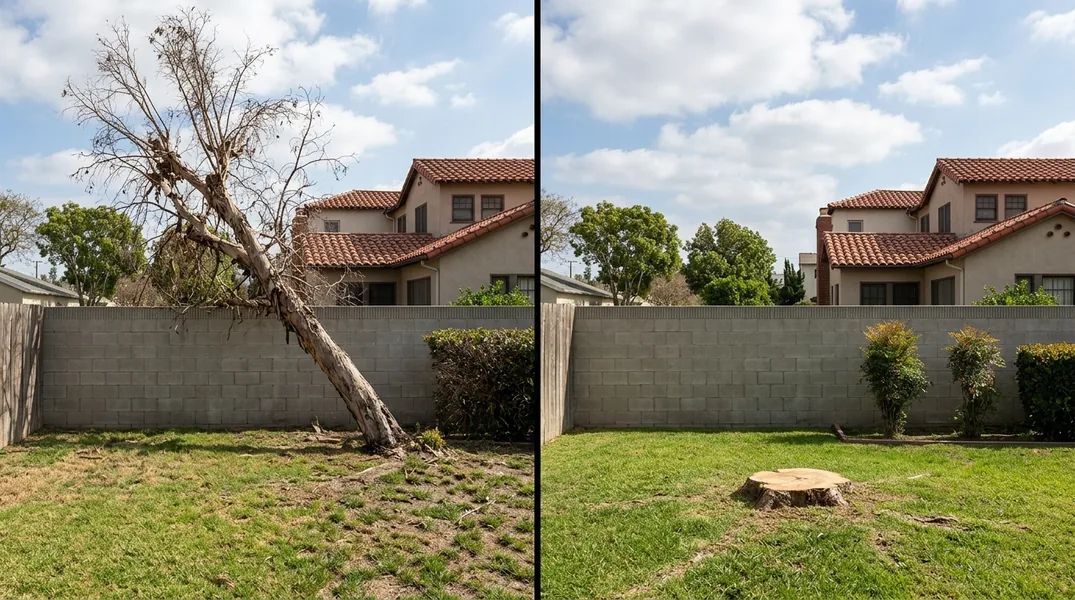
After your tree is removed, you may also want to consider stump grinding to eliminate the remaining stump and restore your landscape. Long Beach Tree Service provides comprehensive removal and site restoration services to ensure your property looks great after the work is complete. We can also advise you on appropriate replacement trees that will thrive in Long Beach's climate and meet city requirements. Whether you're dealing with a single tree or planning a larger landscaping project, our team is here to help you navigate the process smoothly and ensure full compliance with all local regulations.
Looking for a professional tree service contractor in Long Beach? Long Beach Tree Service responds fast for all your tree service needs.
Get a Free QuoteOur services: Tree Removal · Tree Trimming & Pruning · Stump Grinding